



How to Read a City Like a Local: A Starter Guide to Street Details
You can walk the same street for years and still miss most of it. Not because the details are hidden, but because nobody ever told you they were worth looking at. A local doesn't see a city more sharply than a visitor does; they have simply learned which small things answer the big questions. Who lives here. Who works here. What changed last year and what has been the same for forty. What this corner is like at seven in the morning and at eleven at night.
Reading a city is a skill, and like most skills it is mostly a matter of knowing where to put your attention. Here is a starter kit: six kinds of detail worth checking, and a short routine you can run on any unfamiliar street in about ten minutes.
Read the Pavement Before You Read the Signs
The ground is the most honest surface in any city, because it gets replaced in pieces and every piece is a small confession. Start with the kerb. Low, flush kerbs at a corner usually mean the road has been calmed, or that someone thought about wheelchairs and prams. High kerbs with metal railings bolted along them suggest a road where drivers are expected to go fast and pedestrians are expected to be kept out of the way.
Then look for the patches. A long, straight scar of newer asphalt across a road often marks where pipes or cables were laid. A patch that has been repaired three times in the same square metre tells you something underground keeps failing. Manhole covers are worth a glance too: many are stamped with the name of the city, the foundry that cast them, sometimes a year. Cast iron outlives the road around it, so a cover can be decades older than the surface it sits in.
And watch for desire lines: the worn diagonal across a patch of grass, the gap in a railing where people have squeezed through, the corner of a bed where the flowers have been flattened into a path. These are the places where the city's design and the city's habits disagree, and the habits usually win.
The Shop Window Is a Two-Way Mirror
A window tells you who a shop expects to walk in. Prices displayed facing the street mean passers-by are the target. No prices at all usually means regulars who ask. Opening hours are a small biography of the neighbourhood: a shop that closes between one and half past four is built around a lunch break or a school run. A launderette open around the clock sits where people work shifts.
Shutters carry information too. A painted roller shutter, kept in good order, suggests a business that plans to stay. A blank one pulled down at ten in the morning on a weekday might mean the shop is being refitted rather than abandoned, so check the glass for a notice.
Look at the small print
The best details are usually handwritten or badly printed. A card taped inside the window advertising guitar lessons, a room to rent, or a cat that has gone missing tells you this is a street where people know each other. A notice board by the door, layered with old staples, is a record of local arguments and local events. Signs in two languages tell you who the customers are and who serves them.
Look Up: Buildings Are Bad at Keeping Secrets
Ground floors get renovated every decade or so. Upper floors are left alone, which makes them the more reliable witness. A row of filled-in windows on an old facade is often a hangover from historic window taxes, or from a later owner sealing up a draughty room. Chimneys tell you how many fireplaces a building once needed, and how many people it was built for.
Satellite dishes clustered on one wall and all pointing the same way usually mean one provider, or one household sharing with another. Air conditioning bolted onto a facade that was never designed for it suggests a building that got hotter, busier, or both. Balconies are their own small census: laundry means year-round residents, sealed glass means people who want the extra room in winter, and nothing at all on a whole row of balconies is worth noticing.
Watch How People Move
Bollards appear where cars kept parking. Benches are usually placed with their backs to something solid, because most people dislike sitting with their back exposed, and the direction a bench faces tells you what the designer thought was worth looking at. If every bench on a square faces the road rather than the trees, someone made a decision about who that square was for.
Count the crossings along a stretch of road. Two in three hundred metres means the street was designed for traffic. Six means someone expected pedestrians to win. Look at the traffic light button and see where the paint has worn away; a small shiny circle is a decent measure of how many people press it every day. Then watch where people actually wait: they gather in shade, or in the lee of a building out of the wind, and they will ignore the marked waiting area to do it.
Doors, Bells, and Buzzers
A single doorway with twelve buzzers and a handwritten list of names was once one house and is now a small block of flats. A single brass plate with a surname, polished, still means something. Look for the small metal key boxes bolted beside front doors: they often signal short-term lets or managed rentals, which is one reason a street can feel busy and empty at the same time.
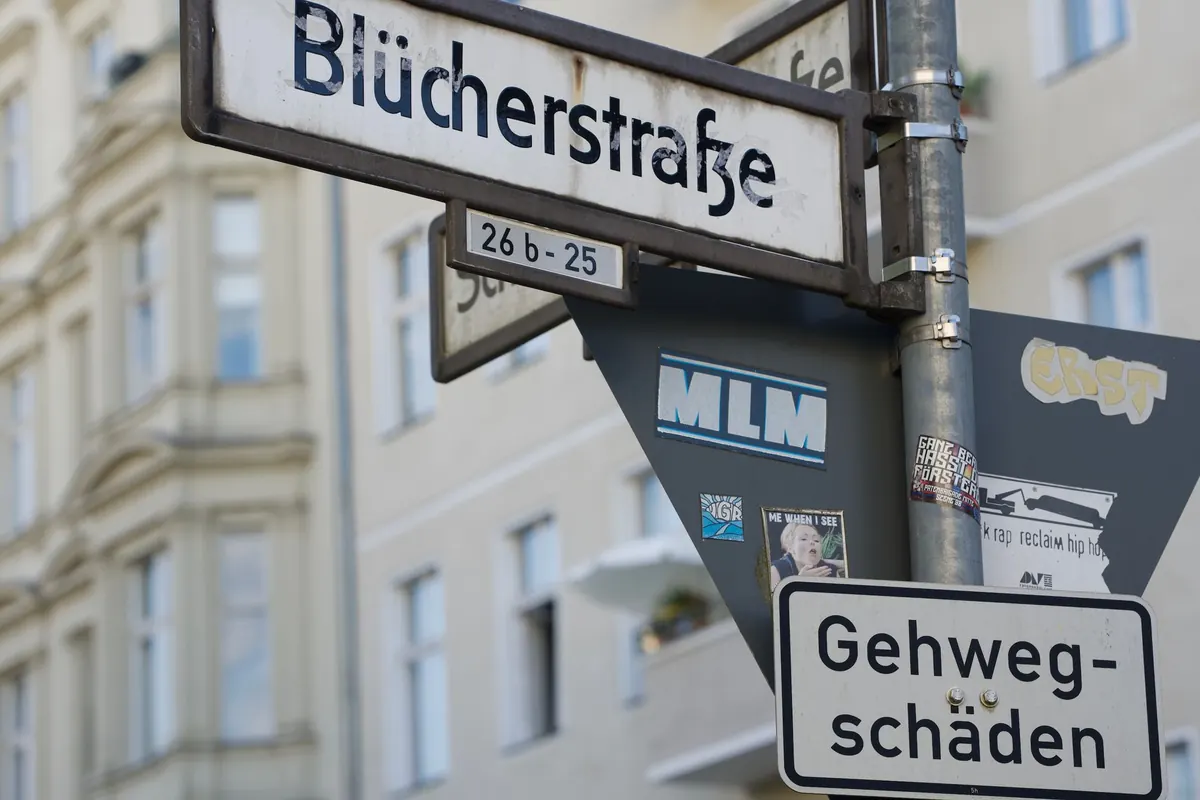
Street numbering rewards a second look. A run of numbers that jumps, or repeats itself as 12, 12a and 12b, usually marks an infill building squeezed into a garden or a gap. Keep an eye out for old street names carved into a wall, higher and smaller than the modern sign.
Notice What Is Missing
Absences are as loud as presences. A sunny square with nowhere to sit, a long residential street with no bins, a row of shops with no café despite heavy foot traffic: each one is a decision someone made, or a decision nobody got round to.
- No shade on one side of a street usually means no trees survived the last round of works.
- A long ground floor with no doors is a single large occupant, and the street dies after six.
- No graffiti on a reachable wall often means active maintenance rather than nothing to say.
- Nobody around at midday in a district full of offices tells you the place empties at six.
- No benches near a bus stop means someone expected you to keep moving.
A Ten-Minute Routine for Any New Street
Pick a corner, stand still, and work through this in order. It sounds mechanical; after a few goes it stops being a list and becomes a habit.
- Stand still for two minutes. Watch where people walk, not where the pavement suggests they should.
- Look down. Kerbs, patches, covers, tactile tiles, the gutter line where leaves collect at the low point.
- Read the ground floor. Windows, prices, opening hours, notices, the small cards taped to glass.
- Check the doors. Buzzers, plates, key boxes, cameras, and how the numbers run.
- Lift your eyes. Windows, chimneys, rooflines, dishes, laundry, and anything that looks older than its neighbours.
- Name one absence. Then walk the block once more and see whether your first impression survives the second pass.
Do that on three unfamiliar streets and you will start doing it without meaning to, on the way to the bakery, on a bus, while waiting for someone who is late. That is the whole trick. The city has been explaining itself the entire time, in kerbs and buzzers and shutters and shade. You just had to be looking at the right things.
Photo: Vinay Reddy Sama / Pexels